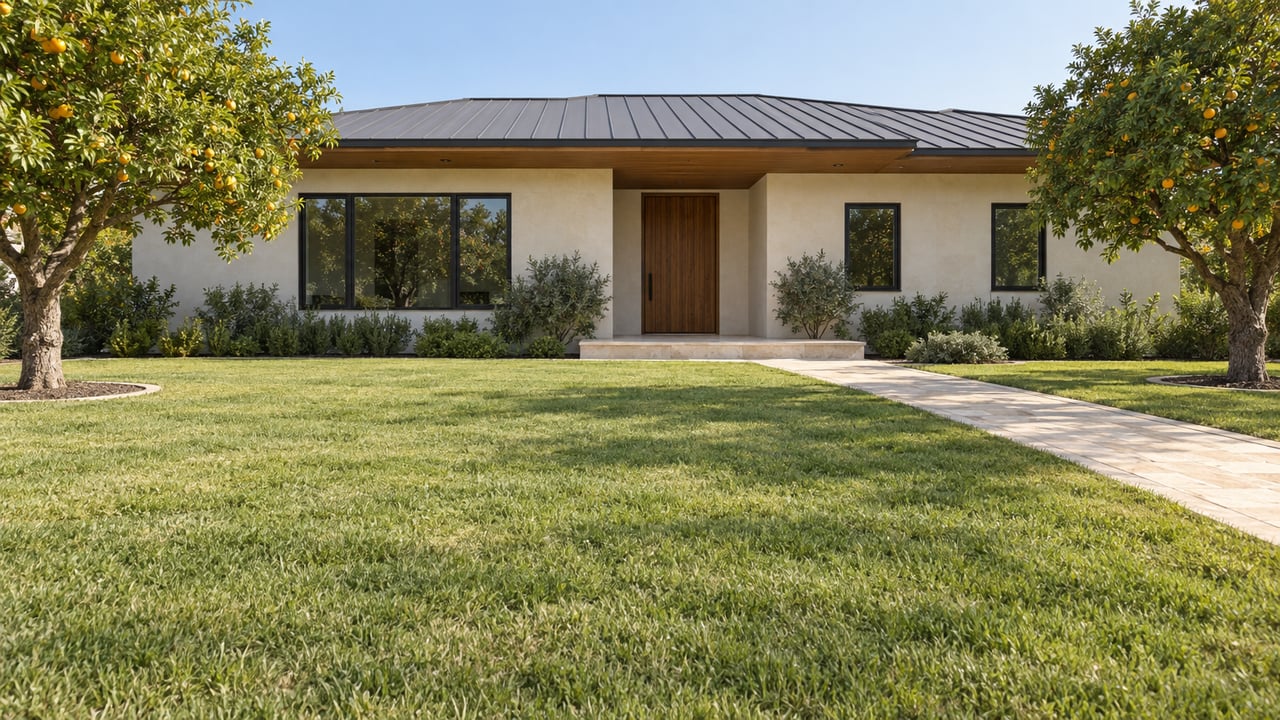
In Arcadia, the Pipe Under Your Lawn Belongs to the Neighbors
October 8, 2026
"If you take out one standpipe that could be a critical disruption to the whole water district," a Pomelo Park resident told Arizona's Family in November 2025. A block wall built during construction of a new house cut off access to a standpipe that sends water to the rest of the neighborhood. The city had issued a permit for the wall. City officials then said the homeowner should have gotten approval from the Pomelo Park Irrigation Water Delivery District first, and they said they would contact all parties to find a resolution.
Pomelo Park is a short drive west of Arcadia, and it runs on the same kind of system. Anyone weighing an Arcadia property should take the dispute seriously. The citrus and the flood-irrigated lawns that set the neighborhood apart are not landscaping in the usual sense. They are a share in infrastructure the neighbors own together, and buying the lot makes you a co-owner.
Salt River Project's notice on private irrigation systems is direct. A property owner who becomes an irrigation customer becomes an SRP shareholder. In Arizona the water is tied to the land, not to the person. The land is entitled to a set allotment, and that allotment cannot be transferred, bought, or sold.
The right is secure. Delivery is another matter. SRP brings water only to the high point of the quarter-section, roughly 160 acres. After the delivery gate, getting the water to each yard is the job of the neighborhood's irrigation customers, and they own the easements the system uses. On delivery day a zanjero opens the neighborhood gate. From there, private ditches, channels, or pipes carry the water lot to lot.
That means an Arcadia buyer inherits two separate assets. One is a water right that cannot be lost in a sale. The other is a share in a pipe network whose condition depends on decades of neighbors keeping it up, or not.
The setup comes from the neighborhood's original purpose. The Arcadia Camelback Mountain Neighborhood Association's history describes Arcadia as the area north of the Arizona Canal and south of Camelback Road, between 44th Street and Scottsdale Road. The first tract platted there, Citrus Homes in 1915, had 25 lots, and each lot's southern edge bordered the canal. The Arcadia plat of 1919 divided land into five- and ten-acre parcels meant to be sold as small citrus orchards.
Water was the constraint. Because of the slope, only lots south of Camelback could draw from the Arizona Canal. The developers formed the Arcadia Water Company in 1919, built pumping plants in Paradise Valley, and by 1924 had laid fifteen miles of underground concrete pipe. The building that now houses the Shemer Art Center and Museum was built in 1919 as the water company foreman's residence.
Later builders kept the irrigation system as the farm fields became homes. The Arcadia Corners neighborhood site credits that decision for the tree-lined streets and points out that the system uses non-potable water, which it says saves residents money. The shade on an Arcadia street today depends on pipe that was already old when the current houses were built.
The SRP bill is small and predictable. Under the 2026 residential tariff, each account pays a delivery fee of $93.87 plus $0.45 per acre, and a basic charge of $53.52 per acre. The basic charge covers a base allocation of 2 acre-feet per acre and applies whether you use the water or not. The SRP board approved the calendar 2027 schedule on March 26, 2026.
| SRP residential charge | 2026 | 2027 |
|---|---|---|
| Delivery fee, per active account | $93.87 | $97.34 |
| Delivery fee, per acre | $0.45 | $0.47 |
| Basic charge, per acre | $53.52 | $56.16 |
| Additional stored and developed water, per acre-foot | $18.45 | $19.00 |
| Supplemental subdivision water, per acre-foot | $63.77 | $66.92 |
Working from those published rates, a half-acre account comes to about $121 in base charges for 2026 and about $126 for 2027, before any additional water. A full acre comes to about $148 and $154. A buyer can safely leave these numbers out of the budget conversation.
The real cost variable sits at the neighborhood level. Many SRP neighborhoods have organized as an Irrigation Water Delivery District, a county special taxing district run by elected neighborhood trustees. The district's annual budget is divided by its acreage and collected through Maricopa County property tax bills. Maricopa County's 2026 rate booklet lists these districts on an acreage basis, and the spread between neighboring districts is wide:
The assessment depends on what a district's trustees budget for, and that tends to reflect how much work the pipe needs. Two lots with the same water right can carry very different shares of a repair bill depending on which side of a district line they fall. Pull the property's actual tax bill and look for the district line. The neighborhood name will not tell you.
Arcadia Corners shows how these districts form. The site says its system was first run by a neighborhood cooperative. The Arcadia Corners Neighborhood Association was then formed to handle irrigation problems more formally, and after a 2019 neighborhood meeting the group pursued district status. The county approved it in February 2021 as Rancho Ventura 12 IWDD #81, and it later took the Arcadia Corners name. Its system covers 40th to 44th Street, including Catalina, Pinchot, and Avalon, along Arcadia's western edge. Salt River Project says forming a district takes approval from "50% plus one" of homeowners inside the proposed boundary. Where no district exists, the upkeep is still shared. It is just organized informally, or through an HOA.
Many Arcadia buyers plan to rebuild or reimagine an older ranch house, and this is where the shared system matters most. SRP's notice says that before any excavation, the owner or contractor is responsible for locating and protecting every part of the private system. It also says:
Underground pipes, open ditches, gates, stand boxes, ditch checks, valves, and all other parts of private irrigation delivery systems may not be removed or changed without express written permission from all private system owners.
All owners means every one of them. SRP adds that these systems are not marked by Blue Stake and are often buried under streets, alleys, sidewalks, and parking lots. Its maps come from the private owners and should not be relied on as accurate for locating lines. Exposed pipe is prone to cracking, and SRP warns that a poor repair can lead to sinkholes. When construction may affect a system, SRP contacts the water shareholders and gives them the contractor's contact information.
A city permit does not settle these questions, as Pomelo Park showed. The new house was said to have no irrigation and no need for access to the standpipe. Opting out of the water did not take the lot out of the system. SRP also says it cannot resolve private disputes over access or delivery facilities, and that some end up with lawyers or in court. A wall, pool, or new driveway on an Arcadia lot is a design decision that the neighbors have a say in.
Land splits work the same way. SRP generally requires a separate account for each deeded parcel, with a $25.90 new-account fee.
Residential deliveries run about every 14 days from April through September and every 28 days from October through March. Water arrives around the clock, so a 2 a.m. delivery is possible, and orders are placed in five-minute increments up to a limit set by acreage and water rights. SRP recommends ordering enough to cover the property with two to three inches of water, which only works if the berms hold it.
The annual canal dry-up also shapes the year. SRP's posted schedule puts the next northside dry-up at January 3 through February 7, 2027. The Arizona Canal is on the north side of the Salt River. During the January 2026 dry-up, about eight miles of the canal in Scottsdale were drained, signage ran west to 68th Street and Indian School Road, and SRP said the work focused on damage from the late-2025 storms. SRP also noted that some northside irrigation customers would not receive canal water during the dry-up. SRP calls the annual dry-up the best time to schedule work on private systems. For anyone closing this fall with a renovation planned, January is the natural window for trenching near the lines.
Can I sell or move the water right separately? No. SRP says the allotment is tied to the land and cannot be transferred, bought, or sold.
If I don't plan to irrigate, am I free of the system? SRP's basic charge applies whether the water is used or not. Any private infrastructure on the lot still needs the other owners' written permission before it can be changed.
Does SRP help pay for broken neighborhood pipe? SRP runs a limited pilot, the Community Irrigation Revitalization Initiative, for one-time repairs to eligible private systems. Long-term maintenance stays with the owners.
When an Arcadia property is on your list, I'm glad to help you look into its irrigation district, its lines, and its renovation limits before you make an offer. Sarah Scannell can walk the lot with you and map what the neighborhood system means for the house you have in mind. Begin a Conversation.
This article is general information, not legal, tax or financial advice. Consult a qualified professional about your situation.
Stay up to date on the latest real estate trends.
Every move deserves thoughtful strategy and trusted guidance. Let's build a plan tailored to your goals and your next chapter.